Understanding HDMI Splitters and Extenders Guide


Overview of the Product
HDMI splitters and extenders are crucial devices in the ever-evolving landscape of home and professional entertainment setups. These gadgets play a pivotal role in delivering high-quality audio and video signals from a single source to multiple outputs or extending the reach of HDMI connections over long distances.
Purpose and Benefits
The main goal of HDMI splitters is to allow one HDMI source, like a Blu-ray player or gaming console, to send signals to multiple displays without losing quality. For instance, a gamer might want to connect their console to the living room TV and a projector in the home theater, achieving that seamless experience one craves. On the other hand, HDMI extenders specialize in boosting the signal over longer distances. They become invaluable, especially in vast setups where the source and display might be far apart — think offices, large venues, or complex home systems. By understanding these products' functions, users can elevate their media experiences significantly.
Target Audience
The ideal users of HDMI splitters and extenders vary widely. Tech enthusiasts who pride themselves on their home theater systems will find these tools enhance their setup's efficiency. Gamers aiming for optimum performance across different displays will appreciate the flexibility these devices bring. Additionally, professionals who rely on presentations in various environments — from classrooms to corporate meetings — can benefit from the functionality offered by these devices. In essence, if you utilize HDMI connections in any form, splitters and extenders are worth considering.
Key Features
When browsing for HDMI splitters and extenders, several features warrant attention:
- Resolution Support: Many modern devices support high resolutions like 4K and even 8K, ensuring your displays shine at their full potential.
- HDCP Compliance: High-bandwidth Digital Content Protection is crucial for avoiding playback issues with copyrighted material.
- Distance Capabilities: Extenders often specify how far they can send their signals without degrading quality, important for large setups.
- Ease of Use: Many of these devices are plug-and-play, meaning straightforward installation with minimal fuss.
With this foundational understanding, let’s delve further into the technical specifications that set these devices apart.
Technical Specifications
To truly appreciate what HDMI splitters and extenders can do, one must familiarize themselves with the details that matter most.
Detailed Product Specs
Undoubtedly, tech specs are where manufacturers shine a light on what their devices can accomplish. Users should pay attention to input/output configurations, common standards like HDMI 2.0 or 2.1, and supported resolutions. For example, many splitters offer capabilities like 1080p at 60Hz, but more advanced versions extend this to 4K at various frame rates.
Performance Benchmarks
Performance can also hinge on several factors:
- Latency: Good quality devices maintain low latency, essential for gaming.
- Signal Integrity: Look for splitters and extenders that assure minimal loss — important in viewing experiences where clarity matters.
- Heat Management: Overheating can reduce device efficiency. Some models come with cooling systems to handle extended use.
Understanding these technicalities equips potential buyers with the knowledge necessary to make informed choices for their particular needs.
Comparison with Similar Products
The market landscape for HDMI accessories is saturated with brands and models, so differentiating these products necessitates a closer examination.
Market Competitors
When comparing HDMI splitters and extenders, one cannot overlook key competitors such as OREI, J-Tech Digital, and IOGEAR. Each brand offers unique features while maintaining affordability.
Comparative Analysis
A well-rounded analysis of specs can lead to recognizing what traders or brands are offering:
- Price Points: While budget options exist, investing in higher-quality ones can save money in the long run due to better durability.
- Warranty/Support Services: Not every label will have the same level of customer service; some offer substantial warranties and easy returns.
Best Use Cases
Select scenarios where these devices shine include:
- Home Theaters: Utilizing multiple screens for a binge-watching session.
- Gaming Competitions: Connecting multiple displays for gamers to showcase their skills to an audience.
- Corporate Presentations: Extenders to pipe video feed to several rooms without compromising quality.
Arming yourself with comparative insights can better position you in your quest to enhance your audio and video setup.
Installation and Setup Guide
With the right gear chosen, getting everything up and running is next.
Requirements for Installation
Before diving into the installation process, make sure to gather the following:
- HDMI Cables: Ensure that you have the right length and quality.
- Power Supply: Some extenders might require a separate power connection.
- Compatible Devices: Confirm all displays support the HDMI versions used.
Step-by-Step Process
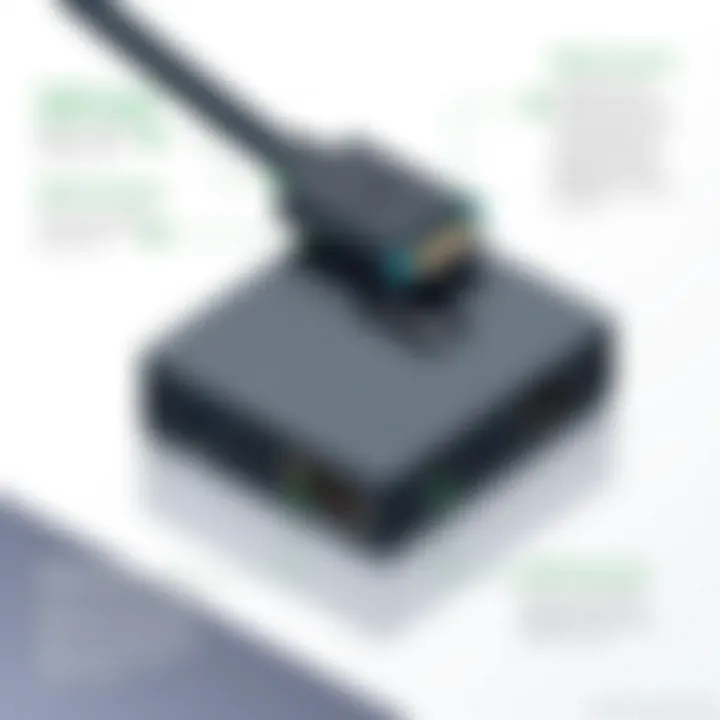
- Connect Your Source: Start by plugging your HDMI source into the input port of the splitter/extender.
- Connect Displays: Hook up your displays to the outputs.
- Power On: If necessary, ensure the power supply is connected and turned on.
- Test Your Setup: Check each connected screen for clarity and performance.
Tips for Optimizing Setup
After installation, keep these suggestions in mind:
- Use High-Quality Cables: Low-quality cables can affect signal integrity.
- Adjust Resolution Settings: Ensure that each display is configured for its optimal resolution.
By following these steps, users can maximize their visuals while minimizing unnecessary headaches.
Commonly Asked Questionss and Troubleshooting
Here are common questions and concerns users might encounter with HDMI devices:
Common Issues and Solutions
- Loss of Signal: This could be due to faulty cables or incorrect configurations. Resolve by checking connections and setting compatibility correctly.
- Incompatibility with Devices: Certain HDMI versions may not work with older devices. Knowing what version you own can ease tensions.
Expert Tips
- Keep Software Updated: Regular firmware updates from device manufacturers can help resolve existing issues or enhance performance.
- Research Thoroughly Before Purchase: Reading user reviews can provide invaluable insights into actual performance.
Foreword to HDMI Technology
In our increasingly digital world, understanding how devices connect and communicate has never been more crucial. HDMI, which stands for High-Definition Multimedia Interface, is one of the most significant advancements in multimedia connections. It's not just about hardware—it revolutionizes the way we experience visual and auditory content.
Why should one care about HDMI technology? Well, think of it as the backbone that links your television, gaming console, and other devices, ensuring crisp visuals and stunning audio. As technology evolves, HDMI has adapted to meet our ever-growing desire for higher quality experiences. It has provided a remarkable leap in connectivity, pushing boundaries on both performance and functionality.
What is HDMI?
HDMI is a compact audio/video interface that transmits uncompressed video data and compressed or uncompressed digital audio data from a source device to a display or projector. It serves as the primary means of interfacing devices, from televisions to projectors, and from gaming consoles to laptops. Imagine it as a highway where massive amounts of data travel rapidly without a hitch, allowing us to enjoy our favorite media without the hassles of lag or distortion.
First introduced in 2003, HDMI has taken the tech world by storm, replacing older standards like VGA and RCA with a sleek and efficient solution. The functionality is remarkable—it carries high-definition signals, and as technology progresses, it has expanded to accommodate advanced standards, making it future-proof in a rapidly advancing tech realm. HDMI simplifies the connection process, reducing the need for multiple cables while enhancing picture and sound quality.
Evolution of HDMI Standards
Throughout its history, HDMI has undergone multiple iterations. Each new version has brought enhancements designed to improve user experience. The initial HDMI 1.0 supported 1080p video at 60Hz, but that was just the tip of the iceberg. As media demands have grown, so have HDMI standards.
With each upgrade, features have expanded:
- HDMI 1.4 introduced support for 4K video and added an Ethernet channel.
- HDMI 2.0 followed, bumping up the bandwidth to 18 Gbps, enabling 4K at 60 frames per second, making it perfect for gamers and movie enthusiasts alike.
- HDMI 2.1, the latest version, supports even more—such as 8K resolution and Dynamic HDR, providing unprecedented picture quality and responsiveness.
The ongoing evolution of HDMI reflects the tech industry’s push towards better quality and innovative features. This continuous advancement highlights a critical consideration for consumers: selecting the right cables and devices that can keep up with these standards is vital for future-proofing your setup.
"As technology transitions at lightning speed, staying knowledgeable about HDMI ensures you are not left in the dust with outdated equipment."
Understanding HDMI technology is essential. It's not just for enthusiasts; anyone who consumes digital media stands to benefit from comprehending these concepts. In following sections, we’ll delve deeper into the nitty-gritty of HDMI splitters and extenders, exploring their functionalities and how they can boost your multimedia experience to new heights.
Understanding HDMI Splitters
HDMI splitters serve a pivotal role in multimedia setups, allowing a single HDMI source to be fed into multiple displays. This can be particularly beneficial in scenarios like gaming, presentations, or broadcasting where one wants to share the same video content across different screens. By comprehending the intricacies of HDMI splitters, users can maximize their entertainment experience or streamline their professional displays while avoiding headaches associated with connectivity issues.
Defining HDMI Splitters
An HDMI splitter functions as a device that takes an input from one HDMI source, such as a gaming console or a Blu-ray player, and splits it into multiple outputs. This way, you can connect a single source to several televisions or monitors, ensuring that the same content appears on each screen. Commonly, HDMI splitters come in various configurations—some support two outputs, while others may accommodate even more. Whether used for a home theater system or a conference room setup, these devices are essential in enhancing sharing capabilities without diminishing quality.
Key Features of HDMI Splitters
Understanding the distinct features of HDMI splitters can make the selection process easier. Here are some noteworthy characteristics to consider:
- Resolution Support: Many modern HDMI splitters can handle high-definition resolutions, including 4K, which is increasingly becoming an industry standard for clarity and detail.
- HDCP Compliance: It’s crucial that the splitter supports High-bandwidth Digital Content Protection (HDCP) to prevent playback issues with copyrighted content.
- Audio Capability: Look for splitters that support both video and audio formats, ensuring you won’t miss out on sound quality when displaying media.
Additionally, some splitters come equipped with features like power adapters and indicator lights, ensuring that users receive optimal performance and troubleshooting insights.
How HDMI Splitters Work
The operational mechanism of HDMI splitters is relatively straightforward, yet effective. The device receives the HDMI signal from the source and duplicates it, sending it out to the multiple outputs. Here’s how it typically works:
- Input Source Connection: The HDMI cable from the source device (like a console or player) connects to the splitter’s input port.
- Signal Duplication: Internally, the splitter replicates the signal and sends it simultaneously to each output port.
- Output Connection: Each HDMI output connects to separate displays, allowing them to show the same content.
The quality of the signal is preserved through this process, as long as the splitter is of adequate quality. Users can enjoy their favorite shows or games universally, ensuring no visual drop-off occurs regardless of how many screens receive the transmission.
By understanding the benefits, functionalities, and operational details of HDMI splitters, consumers can make informed purchases that suit their particular multimedia needs, enhancing both usability and experience.
Exploring HDMI Extenders
HDMI extenders serve a critical role in the evolving landscape of multimedia technology. Their significance lies in their ability to bridge distances between devices without sacrificing quality. In an age where high-definition content is the norm, being able to maintain that quality over long runs of cable is essential. The importance of HDMI extenders can be seen in various setups, from home theaters to professional AV installations, where the integrity of the video and audio output can make or break the experience.
Definition of HDMI Extenders
An HDMI extender, simply put, is a device that allows for the transmission of HDMI signals over longer distances than conventional HDMI cables can handle. Typically, HDMI cables work effectively up to 50 feet, but extenders can push that boundary, sometimes exceeding lengths of up to 300 feet or more. They commonly utilize Ethernet cables or fiber optics to transfer the signal, which mitigates signal degradation and results in a clearer picture and sound.
Essential Functions of HDMI Extenders
The functions of HDMI extenders are manifold and quite essential for users dealing with extensive setups. Not only do they enable a longer range for HDMI signals, but they also come with several beneficial features:
- Signal Enhancement: They boost the HDMI signal, which is particularly useful in environments with a lot of electronic interference.
- Versatility: Many extenders support additional audio formats, allowing users to customize their sound output according to their preferences.
- Multiple Outputs: Certain extenders offer multiple outputs, which can simultaneously connect different displays without losing quality. This is particularly beneficial for businesses that need to project the same content across multiple screens.
- Support for High Resolutions: Most quality extenders today can handle resolutions up to 4K, making them a great choice for modern content creation and streaming services, without losing the clarity and sharpness.
These capabilities make HDMI extenders essential tools for both casual users and professionals alike.
Mechanism of HDMI Extenders
Understanding how HDMI extenders work provides insight into their reliability. Most HDMI extenders come in a sender-receiver pairing. Here’s a breakdown of the typical setup:
- Sender Unit: This unit connects to the HDMI source (like a Blu-ray player or gaming console). It encodes the signal and prepares it for transmission.
- Transmission Method: Depending on your setup, the signal can be transmitted using:
- Receiver Unit: The receiver, located near the display device, decodes the signal back to HDMI format, forwarding it to the display or projector.
- Cat5e/Cat6 Cables: These twisted-pair cables allow data to travel over long distances without losing integrity.
- Fiber Optic Cables: For higher bandwidth needs, fiber optics are used, offering better performance over extensive runs.
This straightforward mechanism is both effective and efficient, ensuring that you get high-quality audio and video across distances that would otherwise be problematic for standard HDMI cables.
"HDMI extenders can dramatically enhance your viewing experience by maintaining high quality over distance, making them indispensable in modern audio-visual setups."
Comparing HDMI Splitters and Extenders
When diving into the world of HDMI technology, understanding the distinctions between HDMI splitters and extenders is paramount. Both devices might appear similar at first glance but serve different purposes that can significantly impact your audio and visual setups. Comprehending these differences not only aids in selecting the right device but also enhances your overall multimedia experience.
Fundamental Differences
At their core, HDMI splitters and extenders serve distinct functions. The crux of the matter lies in what they achieve:
- HDMI Splitters: These gadgets are designed to take a single HDMI source, such as a Blu-ray player or gaming console, and duplicate the signal to multiple outputs. Think of it as a multi-mic setup in a band — the original sound gets distributed to different speakers.
- HDMI Extenders: In contrast, extenders stretch the reach of an HDMI signal over longer distances, often using Cat5e/Cat6 cables. Imagine trying to connect a monitor that’s far away from your computer. Just like a long phone call needs a good signal boost, an extender ensures that the quality remains intact even across significant lengths.
Additionally, while splitters typically provide a mirrored output with the same resolution to each device, extenders can sometimes support various resolutions depending on the receiving devices. To sum it up, if your aim is to expand your display options, a splitter is your go-to, but if you need to bridge a distance, then extenders are the key.
Use Cases for Each Device
Understanding when to use each device can optimize your setup effectively:
- When to Use HDMI Splitters:
- When to Use HDMI Extenders:
- Multiple Displays: Perfect for environments like sports bars or exhibitions where the same content needs to be showcased on several screens. A sports bar might want to show a crucial game across various TVs, ensuring no fan misses a play.
- Interactive Presentations: In corporate settings, splitters can facilitate a presentation across multiple screens in a meeting room, making it easier for all attendees to view the content without straining.
- Long-Distance Connections: Ideal for setups where the source and the display are physically apart, such as in auditorium settings or homes where the entertainment system is located in one room while the display is in another.
- Complex Audio-Visual Installations: For professional setups involving projectors or large monitors in convention centers, extenders maintain the video quality without the hassle of compromising due to cable lengths.
"The right tools can often make or break the effectiveness of an audio-visual setup. Choose wisely."
For more technical specifications or install tips, check sources like Wikipedia on HDMI or engage with communities on Reddit where tech enthusiasts often share their insights.
Technical Specifications to Consider
When venturing into the world of HDMI splitters and extenders, understanding technical specifications is akin to having a compass in a dense forest. This knowledge not only helps consumers choose the right devices but also ensures optimal functionality and performance. Technical specifications directly influence the quality of audiovisual transmission and determine whether your setup will deliver stunning visuals and crystal-clear audio or leave you grappling with frustrating glitches.
There are three primary elements within the realm of technical specifications that deserve careful examination: resolution and bandwidth requirements, cable length and quality, and compatibility with devices. Let’s break these down in detail.
Resolution and Bandwidth Requirements
Resolution is paramount in today’s high-definition world. Whether it’s 1080p, 4K, or even bustling into the realm of 8K, the resolution determines the sharpness and clarity of your display. Bandwidth, on the other hand, refers to the amount of data that can be transmitted over a cable at any one time. These two elements are closely intertwined.
For instance, 4K resolution typically requires considerably more bandwidth than 1080p. A standard HDMI 1.4 cable provides up to 10.2 Gbps, which is sufficient for 1080p content but can struggle under the weight of 4K signals. HDMI 2.0 and later versions, conveniently pushing up that bandwidth to 18 Gbps, allow for smoother transmission of higher resolutions, making them ideal for modern gaming and high-definition media consumption.
“When considering HDMI equipment, always factor in what resolution you aim to achieve; it could save you from headaches of pixelated viewing.”
Make sure to check the specifications on both the splitter or extender and your source or display device. Knowing your resolution needs—and ensuring your equipment matches those needs—is key to enhancing your multimedia experience.
Cable Length and Quality
Next up is cable length and quality. Ever heard the phrase "the longer the cable, the weaker the signal?" This rings true in the HDMI world, where distance can affect performance. A longer cable can lead to signal degradation, which can be a real buzzkill during movie night.
In general, lengths of up to 25 feet can work well if you're using high-quality cables. But as you stretch beyond that, you might find yourself needing active cables or signal boosters to ensure the picture and sound remain intact. Costlier premium cables, though they may seem like a luxury, are often designed to deliver clearer signals over longer distances. So, choosing your cable wisely is just as important as choosing your devices.
Compatibility with Devices
Not all HDMI devices speak the same language. Different standards and versions can lead to compatibility issues that complicate what should be a straightforward connection. For instance, an HDMI 1.4 device connected to a splitter that supports HDMI 2.0 may work, but you might not be able to utilize all the features of the newer technology.
It’s essential to check the compatibility of your HDMI splitter or extender with the devices you plan to connect. Before making a purchase, consider the implications of version differences. If you're gaming on a console that supports 4K and your splitter doesn't, that could turn your high-tech setup into a subpar experience. Familiarizing yourself with these nuances will help avoid the pitfalls of mismatched equipment.
Installation Considerations
When diving into the world of HDMI splitters and extenders, understanding installation considerations is paramount. It’s not just about plugging in cables and calling it a day. Proper setup can enhance the performance of your devices, reduce common issues, and optimize the overall multimedia experience. Whether you’re streaming the latest Netflix series or gaming with friends, a well-thought-out installation can make all the difference.
Setup for HDMI Splitters
Setting up an HDMI splitter involves a few straightforward steps, but neglecting any part can lead to frustration. Here’s how to get it right:


- Identify Your Source and Outputs: First, know where your HDMI source is coming from — typically a Blu-ray player, gaming console, or a streaming box. Next, decide how many displays you want to connect.
- Choose the Right Splitter: Not all splitters are created equal. Make sure to select one that meets the bandwidth requirements for your resolution needs. For instance, a 4K UHD setup will need a splitter that supports higher speeds.
- Cable Quality Matters: Use high-quality HDMI cables. Cheap cables may not deliver the same performance and might result in signal degradation. This is especially important when the distance between devices is considerable.
- Connect and Power Up: Connect your HDMI source to the input of the splitter, and then connect each output to the desired display. Don’t forget to power the splitter if it requires external power; some models are powered through HDMI, but many need a plug.
- Test Each Output: After everything is connected, turn on your devices. Check each display to ensure the signal is transmitted correctly across them. If one display doesn’t work, double-check connections and settings.
Important: If the video doesn’t display correctly, this might be a sign of an incompatibility issue or a faulty cable. Don’t hesitate to switch out cables or check for settings on your source device.
Configuring HDMI Extenders
Configuring HDMI extenders is another crucial aspect that can enhance your viewing experience, especially if you need to transmit high-definition signals over longer distances.
- Type of Extender: Decide between a wired or wireless extender. Wired options using CAT5/6 cables offer more stability but require additional cable management. Wireless extenders are convenient but can suffer from interference.
- Installation Location: Position the HDMI extender where the signal can be easily transmitted. A clear line of sight between the transmitter and receiver is ideal for wireless devices, while wired options might require careful routing to avoid long cable runs.
- Power Supply: Just like splitters, many extenders require a separate power supply. Always ensure they’re plugged in and ready to go.
- Resolution Settings: Once everything is plugged in, take a moment to ensure that the resolution settings on your source device match the capability of your display and the extender. Some extenders may automatically adjust, but a little oversight can save headaches later.
- Testing and Optimization: After installation, test the setup at various distances to find any signal loss or latency issues. Adjust the settings as necessary for optimal performance.
By paying close attention to installation considerations, you can avoid common pitfalls that often lead to subpar performance of HDMI splitters and extenders. Delving into setup specifics ensures you get the full spectrum of audio and visual experiences, making your investment well worth it.
Market Trends and Product Selection
In today’s fast-paced digital landscape, staying abreast of market trends is not just valuable; it's vital. For tech enthusiasts, gamers, and computer builders, understanding the latest developments in HDMI splitters and extenders can mean the difference between subpar performance and an exceptional multimedia experience. This section delves into current trends affecting HDMI products and offers guidance on selecting the right device tailored to specific needs.
Current Trends in HDMI Products
The realm of HDMI technology has progressed leaps and bounds, reflecting the changing demands and expectations of consumers. Here are some notable trends shaping the market:
- 4K and 8K Capability: As more consumers upgrade to 4K and 8K displays, manufacturers are quickly adapting their products to ensure compatibility. HDMI splitters that support 8K resolution are slowly becoming mainstream, ensuring a crisp, detailed picture.
- HDR Support: High Dynamic Range (HDR) enables a broader range of colors and contrast ratios. A growing number of HDMI devices now come equipped with HDR capabilities. This added feature is increasingly sought after, particularly among gamers and film aficionados wanting to elevate their viewing experience.
- Wireless HDMI Transmitters: The demand for cable-free setups has led to the rise of wireless HDMI options. While traditional HDMI splitters and extenders remain popular, the convenience of wireless devices, which transmit high-quality signals without the clutter of cables, is catching on.
- Smart Technology Integration: Recent HDMI devices increasingly incorporate smart technology, allowing for seamless integration with home automation systems. This shift caters to the tech-savvy consumer looking for convenience.
- Price Competitiveness: As competition heats up within the HDMI market, consumers benefit from reduced prices across the board. More affordable options now deliver high-quality performance, making advanced technology accessible to a wider audience.
"The only constant in tech is change, and HDMI technology is no exception. Keeping your ear to the ground can unlock better performance and value for your setup."
How to Choose the Right Device
Selecting the right HDMI splitter or extender can seem daunting, especially with so many options on the market. However, focusing on several key factors makes the process more straightforward.
- Determine Your Needs: Start by clarifying your specific requirements, such as the number of displays or the distances between devices. Are you streaming content, gaming, or setting up a home theater? Each application might demand different specifications.
- Check Resolution Compatibility: Ensure that your device supports the resolution you desire, whether it's 1080p, 4K, or even 8K. This is particularly crucial for enthusiasts wanting to enjoy the latest content in the best quality.
- Consider Additional Features: Look for features like HDR support, audio return channels, or built-in signal amplification, which can enhance your overall experience.
- Assess Build Quality: In the world of electronics, not all products are made equal. Invest in well-reviewed units from reputable brands to avoid frustration down the line.
- Read Reviews and Feedback: Before making a purchase, dive into user reviews. Platforms like Reddit or dedicated tech forums offer honest assessments that can guide your decision.
By understanding current trends and making informed choices, consumers can ensure their HDMI devices not only meet their expectations but also enhance their viewing or gaming experience.
For further detailed exploration on the market trends and selection of HDMI products, you can refer to Wikipedia or Britannica. For community feedback and discussions, platforms like Reddit can be helpful.
Potential Challenges and Solutions
In the realm of HDMI splitters and extenders, recognizing potential challenges holds paramount importance. As technology continues to evolve, so do the needs and expectations of users. Addressing these challenges not only enhances functionality but also maximizes the overall experience of multimedia setups. The following sections delve into various common issues associated with HDMI splitters and extenders, coupled with practical solutions to overcome them.
Common Issues Faced with Splitters
HDMI splitters, while exceptional in their functionality, are not immune to problems. A few common issues that users may encounter include:
- Signal Loss: This is a frequent headache for many users. It occurs when the quality of the signal degrades as it travels through the splitter. A too long or low-quality HDMI cable can exacerbate this issue.
- Resolution Limitations: Sometimes, users expect high-definition capabilities, but the splitter may not support 4K output or higher resolutions. This can be particularly frustrating for gamers and movie enthusiasts.
- Incompatibility: Not all HDMI devices play well together. Certain splitters may struggle with specific brands or older equipment, leading to connectivity issues.
To tackle these issues, consider the following approaches:
- Ensure high-quality cables are used, preferably HDMI 2.0 or later to support higher bandwidths.
- Select a splitter that meets your specific resolution requirements. Always check the specifications before purchasing.
- Before buying, research compatibility with existing devices, perhaps using user forums on websites like Reddit or tech help forums.
Troubleshooting Extender Problems
HDMI extenders allow users to extend signals over longer distances, which, while beneficial, comes with its own set of challenges. Common problems include:
- Signal Degradation: Extending the HDMI signal beyond recommended lengths can lead to a weaker signal, causing lag or visual artifacts.
- Power Supply Issues: Some extenders require external power. Without a proper power source, they may fail to operate correctly.
- Latency Delays: Sometimes, particularly over a network, users may experience a delay between action and display, which can be a dealbreaker for competitive gaming.
For effective troubleshooting, try these solutions:
- Utilize HDMI over Ethernet extenders for longer runs, as they are generally more reliable than simple extenders. Ensure that the Ethernet cables used are of high quality.
- Always cross-check power requirements and make sure a proper power connection is available and functioning.
- If lag becomes apparent, systematically test each component, ensuring that your source, cables, and display are all up to scratch.
Effective troubleshooting of both splitters and extenders not only restores functionality but also improves the overall multimedia experience. It's crucial to address these potential roadblocks in a timely fashion to keep your setup running smoothly.
By understanding these common challenges and their respective solutions, tech enthusiasts, gamers, and computer builders will be better equipped to handle any hiccups that arise in their HDMI setups. The right knowledge can make a world of difference.
Finale
In summing up the discussions surrounding HDMI splitters and extenders, it’s vital to emphasize the essential roles they play in enhancing multimedia experiences. As technology continues to evolve, having the right equipment not only simplifies setups but also maximizes the quality of audio and video transmission. Ultimately, understanding how these devices function and their practical applications can empower users to make choices that best suit their unique environments.
Summarizing Key Points
- Importance of Device Selection: Choosing the right tool for the job can significantly impact media quality. Splitters and extenders serve distinct purposes but can often be confused due to their overlapping capabilities.
- Technical Specifications Matter: Key technical specifications like resolution support, bandwidth capacity, and connection compatibility should be paramount in consideration.
- Potential Challenges and Solutions: Both HDMI splitters and extenders come with their potential pitfalls. Recognizing common issues can facilitate more straightforward troubleshooting, preventing disruptions in media enjoyment.
- Market Trends: Staying updated on current market trends and product options can influence informed purchasing decisions.
In summary, this guide aims to provide clarity amidst the clutter of HDMI technologies, ultimately ensuring greater satisfaction in multimedia setups.
Final Thoughts on HDMI Devices
The journey through HDMI technology reveals much about how these tools can enhance our viewing experiences. An HDMI splitter's ability to send a single signal to multiple outputs, alongside an extendable range through HDMI extenders, showcases the versatility demanded in today’s tech environment. Consider also that the digital landscape continually changes, so remaining vigilant about innovations in HDMI technology can keep your systems optimized.
Be sure to weigh the approaches carefully as you plan your home theater or gaming rig. It’s not just about getting the latest kit; it's about ensuring that each component works seamlessly together to produce the best visual and audio quality possible. In the end, investing time into understanding the nuances of HDMI equipment pays off significantly in your everyday media experiences.
For more insights and detailed discussions on HDMI technology, consider visiting resources like Wikipedia or tech communities on Reddit.
"Knowledge is power, and in the realm of technology, being equipped with the right info can lead to an unparalleled experience."
Keep exploring, and enjoy the journey of discovery!